

Blogs & Editorials
Creativity in the Age of Artificial Intelligence: Toolkits for the Modern Mind
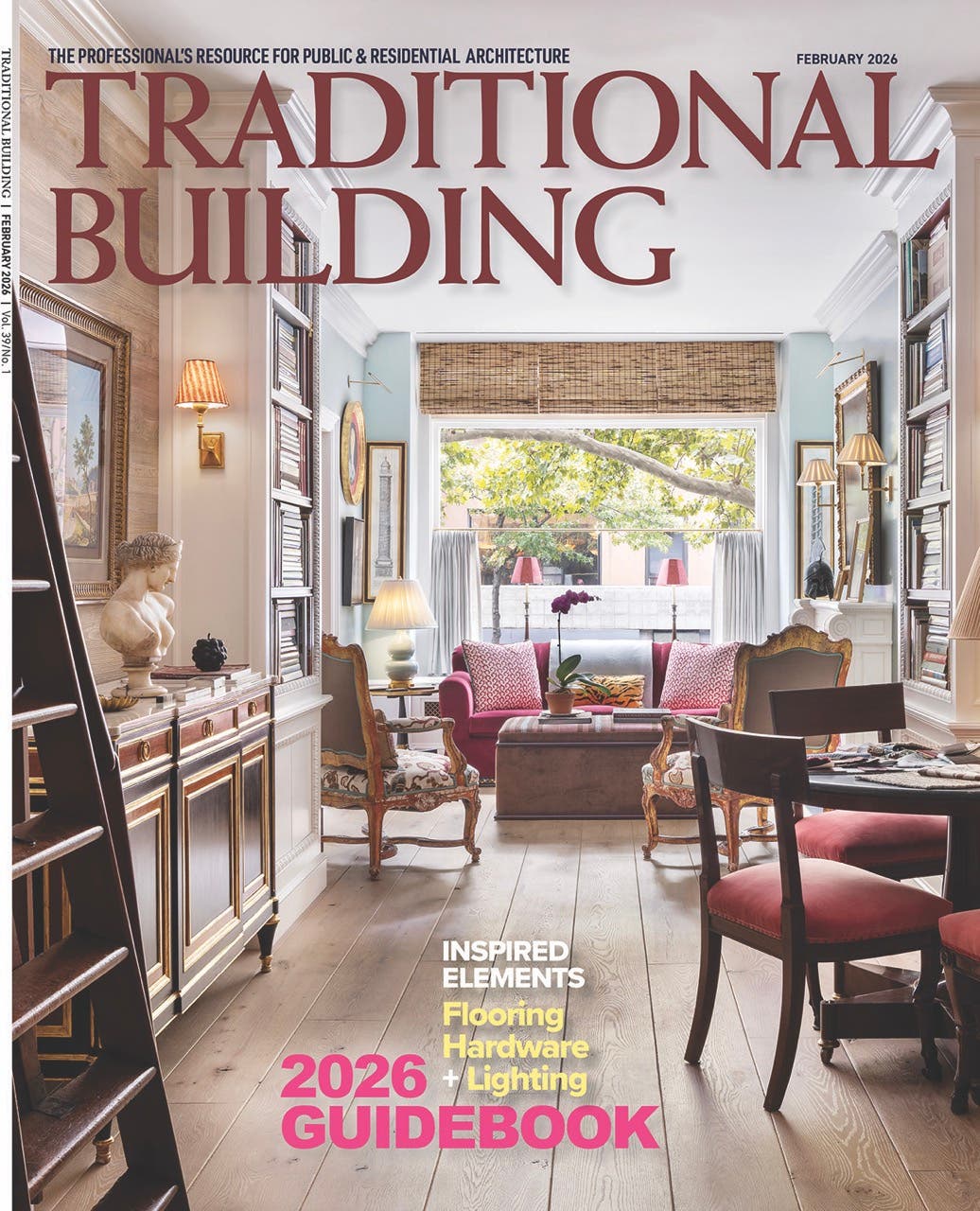
Last fall, for the October issue ofTraditional Building, we spoke with architects JB Clancy and Tom Kligerman and landscape architect Nick Fobes about how they are using artificial intelligence in their practices. It’s a topic on everyone’s mind, inevitably accompanied by the question: Will artificial intelligence make architects and designers obsolete?
Nick Fobes of Hoerr Schaudt was unequivocal. “Early in the design process, it’s important that everything is human, especially if you’re designing at a high level. You can’t duplicate the design process.” JB Clancy described design as “an iterative, nonlinear process with moments of serendipity,” adding a concern many share: Will those moments of serendipity get lost as firms adopt automation?
And yet, all three design professionals we interviewed are actively using artificial intelligence—in ways that range from image-making to handling mundane operational tasks. “Artificial intelligence is not even coming," Tom Kligerman declared, "it’s here.”
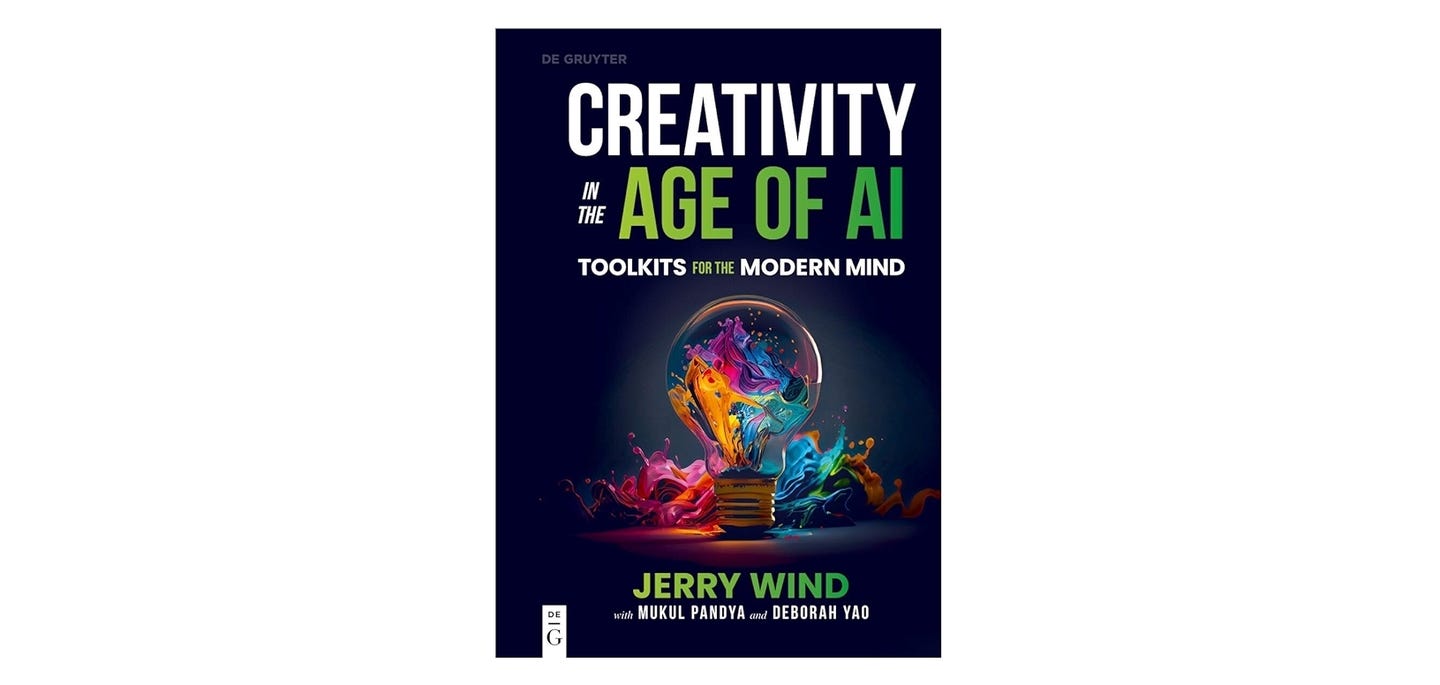
Those conversations sparked my interest in a new book, Creativity in the Age of AI: Toolkits for the Modern Mind, by Jerry Wind, professor of marketing at the University of Pennsylvania’s Wharton School. After reading the book, I interviewed Mr. Wind along with his wife, award-winning interior designer Barbara Eberlein, for this month’s Building Tradition podcast.
What emerged clearly from that conversation is that AI does not replace creativity—it enhances it. When used thoughtfully, AI acts as an intelligent assistant, engaging in a question-and-answer dialogue that can lead to deeper thinking and more innovative design solutions.
“AI helps designers challenge the status quo,” Mr. Wind explains. Ms. Eberlein agrees, describing AI as “a good collaborator—a tool that can synthesize disparate design approaches and broaden the range of options.” By requesting visualizations, designers can quickly generate room settings based on prompts like “show me examples of classical interiors.” AI’s ability to aggregate ideas rapidly also saves time when communicating with clients. “Our clients can’t always articulate what they want,” Eberlein notes. “AI helps us show them. There is never only one answer.”
In the chapter “Challenge Your Mental Models,” Mr. Wind references the famous “gorilla experiment,” a lesson in inattentional blindness. When people are intensely focused on a specific task, they may completely miss unexpected events—like a person in a gorilla suit walking across a basketball court. Wind uses this metaphor to illustrate how creativity is stifled when we operate within an unexamined mental status quo. He also discusses common forms of biased thinking such as groupthink and overconfidence bias.
“To find new ideas, seek diverse perspectives from non-traditional sources,” Wind advises—and AI makes those sources accessible quickly and efficiently.
During our interview, Barbara Eberlein shared a compelling real-world example from the renovation of her 19th-century Philadelphia townhouse. The original kitchen was located in the basement, while the dining room was upstairs. She wanted both spaces on the same level, but adjacent space was extremely limited.
Through a series of “what if?” conversations with AI, exploring multiple scenarios, she arrived at an unconventional solution: relocating the stairway and reclaiming space from a tiny pantry. The result was a new kitchen overlooking the dining room—visible when desired, yet concealable behind a sliding pocket door.
“I had a trial-and-error conversation with AI,” Eberlein explained. “It’s not unlike the conversations we have with collaborators when reviewing options—except this time, I had the conversation with my computer.” She was quick to emphasize that AI did not replace her judgment. “I’m still the quarterback—the director, the critical mind, and the generator of ideas. But the conversation with my AI assistant led me to richer ideas.”
In his book, Wind also addresses the silos that exist within organizations and the importance of breaking them down to improve communication and collaboration across departments. AI, he suggests, can help assimilate different viewpoints and communicate an integrated message—a concept especially relevant in our industry, where teams often include architects, interior designers, builders, subcontractors, engineers, landscape designers, material suppliers, and clients who may never share the same office.
“Creativity thrives in refining, reshaping, and adapting concepts through continuous feedback and real-world testing,” Wind writes. “We must embrace experimentation and iteration. Experimentation is fundamental to the creative process.” AI, he argues, facilitates this experimentation by accelerating iteration.
So, will artificial intelligence put creative professionals out of business? Wind doesn’t think so. “Jobs in customer service will be lost,” he says, “but creatives are secure.” As Nick Fobes told us previously, “The goal of AI should be to simplify the mundane tasks—the busy work—and allow more time for creativity and exploration.”
On that point, Jerry Wind and Barbara Eberlein are in complete agreement.


Manufacturer of custom lighting fixtures: chandeliers, sconces, pendants & lanterns; new designs, historic reproductions & custom work; handcrafted in wood, tin, brass or copper; glass, mica or alabaster shades.